← Blog · Practice
Why Google's Nano Banana Pro Is The Best image Generator
 Ayushman Dash · December 14, 2025 · 4 min read
If you’ve been experimenting with AI image generation lately, you’ve likely hit the “consistency wall.” You generate a perfect character, but the moment you ask the AI to move them to a new room or change their outfit, they turn into a completely different person.
Enter Google’s Nano Banana (the community’s affectionate nickname for the latest Gemini Nano update).
It is a massive leap forward for character consistency and speed. In our recent tests, we found that Nano Banana doesn’t just hold facial structures perfectly, it does so at lightning speeds. We clocked an average generation time of just 17.87 seconds per image.
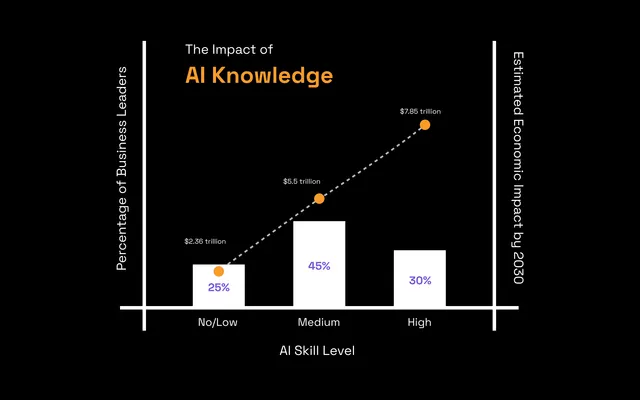
For creators, this means you can iterate through a storyboard in minutes. As noted in McKinsey’s State of AI report, the industry is rapidly shifting toward tools that offer real-time workflow integration, and this update puts Google right at the forefront of that shift.
Let’s look at a real-world example of how this model handles complex, sequential editing without losing the subject’s identity.
The Consistency Test: A 3-Step Workflow
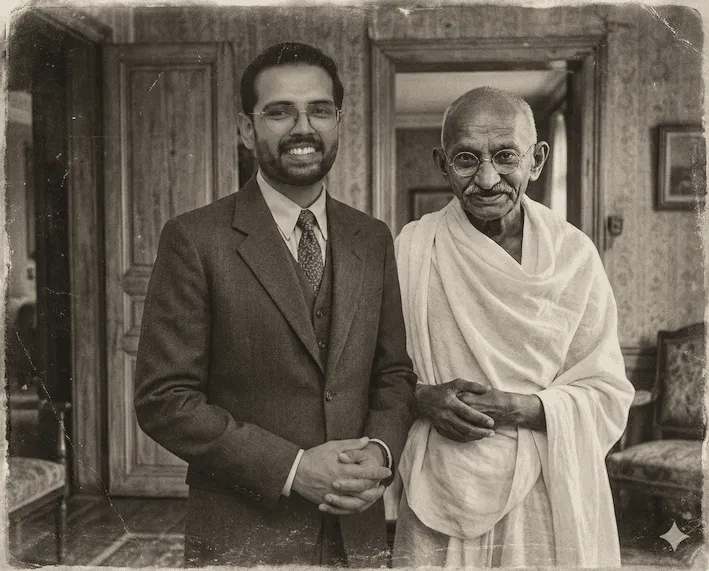
To prove the power of this model, we ran a specific test case: taking a subject from a crowded photo, isolating him, and time-traveling him to the 1940s.
Here is the exact prompt workflow we used. Notice how we stack the instructions to maintain the “face and body structure” at every step.
The Original Image That I Uploaded
I masked the faces of the other people for their privacy but when I uploaded it I uploaded an unmasked version.

Step 1: Isolation and Cleanup
Goal: Isolate the subject and stabilize the environment.
Prompt: “Remove all people from the background of this photo, keeping only the man in the white shirt. Change the setting to an indoor scene without open windows. Adjust the man’s pose to remove the glass from his hands, but ensure his facial features and body structure remain identical.”
Why this works: The model took just over 17 seconds to process this complex in-painting request. By explicitly asking it to keep the “facial features identical,” the model locks onto the subject’s vector data, ensuring the nose, jawline, and eye spacing don’t morph.

Step 2: Contextual Shifting
Goal: Add a historical figure without distorting the main subject.
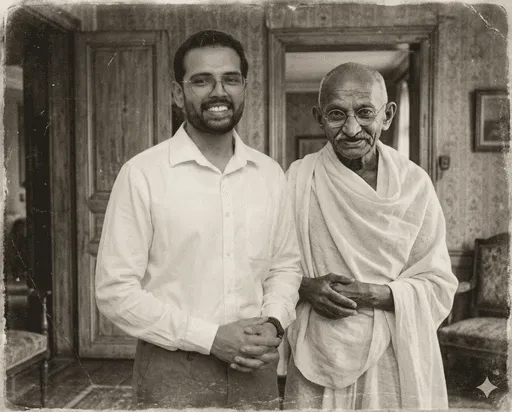
Prompt: “Place the man in the white shirt standing next to Mahatma Gandhi. Apply a black-and-white filter to make the image look like a photograph from the 1940s. Maintain the man’s face and body structure exactly.”
The Result: Usually, adding a famous figure like Gandhi causes the AI to hallucinate or blend the features of the two men. Nano Banana kept the subjects distinct, rendering the 1940s film grain effect while preserving the original subject’s bone structure perfectly.
Step 3: Period-Accurate Styling
Goal: Change the clothing while keeping the body type consistent.
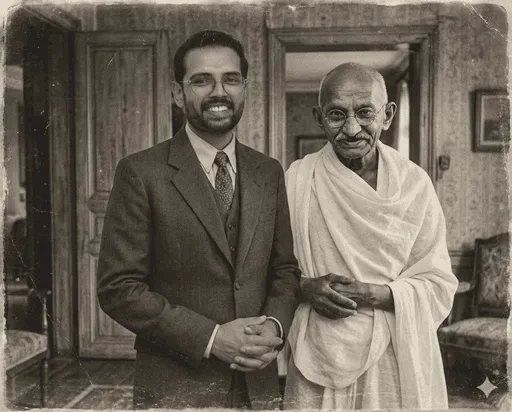
Prompt: “Change the man’s outfit to match the attire of a 1940s diplomat. Ensure his face and body structure remain unchanged.”
The Breakdown: This is the ultimate stress test. Cloth simulation often distorts the body underneath. However, the model successfully draped a double-breasted 1940s suit over the exact body structure of the original image, proving that high-speed generation doesn’t have to sacrifice precision.
Why Speed Matters in Consistency
Why are we so obsessed with the 17.87-second average? Because consistency requires iteration.
When you are building a narrative, you rarely get the perfect shot on the first try. You need to tweak angles, lighting, and props. If every generation takes 60 seconds, you lose your creative flow. At ~18 seconds, the feedback loop is tight enough that you can treat AI generation almost like a real-time photo editor.
This performance aligns with the recent advancements in Latent Consistency Models (LCMs), which are designed to generate high-fidelity images in fewer steps. Google seems to be leveraging similar architectural efficiencies to ensure that “fast” no longer means “low quality.”
More from AI with Ayushman
- You’re Viewing AI Wrong: Why It’s a Growth Engine, Not a Cost Cutter
- 5 Prompts That Will Help You Crack Any AI Interview
- Google did two things this month that no one is talking about