← Blog · Practice
Google did two things this month that no one is talking about.
 Ayushman Dash · November 29, 2025 · 4 min read
Google’s Two “Quiet” Breakthroughs That Change Everything
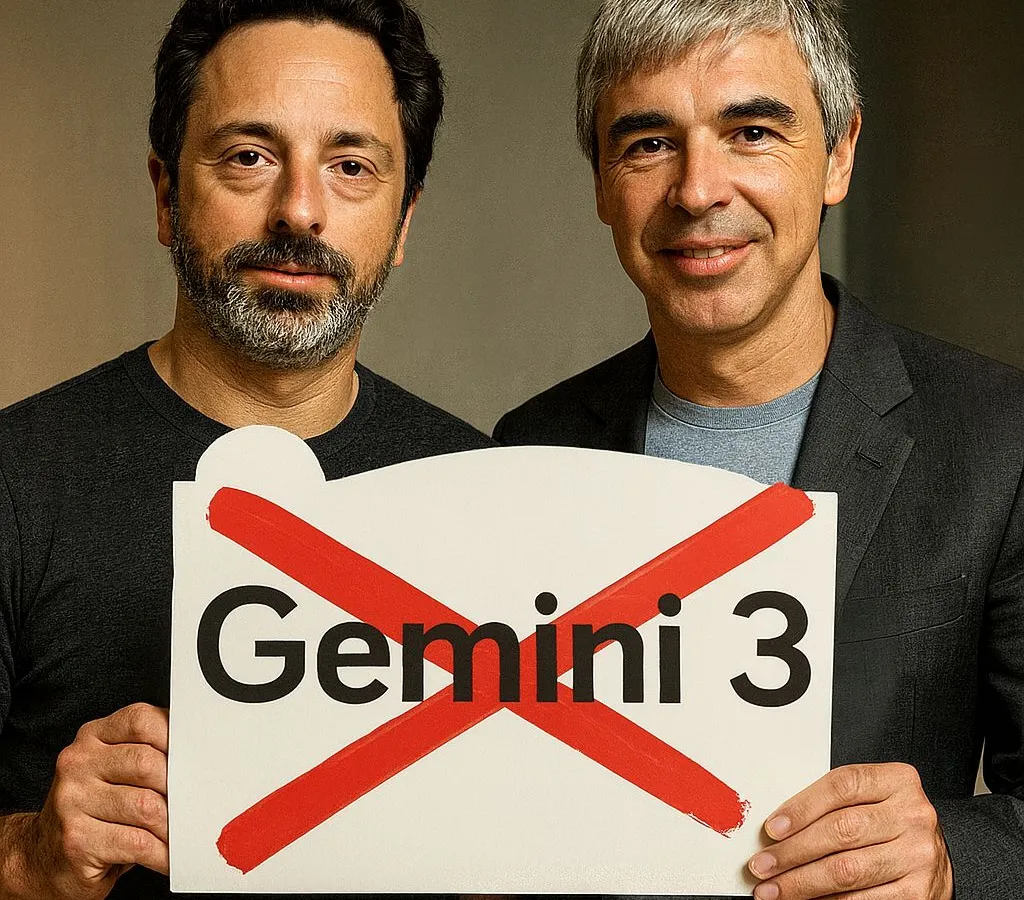
Everyone is talking about Gemini 3.
And fair enough, it is a massive release. The benchmarks are impressive, and the reasoning capabilities are a leap forward. But while the world was busy reacting to the shiny new model, Google quietly dropped two other updates this month that might actually be more important for the future of AI.
These weren’t flashy product demos. They were fundamental shifts in how AI learns and how it is built.
Here are the two major Google updates you likely missed.
1. Nested Learning: Solving the “Goldfish Memory” Problem
The Problem: Catastrophic Forgetting Right now, training an AI model is a lot like a student cramming for an exam. They learn everything in one massive session, but the moment you try to teach them something new after that session, they tend to overwrite the old information.
In the industry, this is called Catastrophic Forgetting. It is why your favorite LLM can’t usually learn from your chats in real-time without eventually losing its core abilities.
The Solution: Google’s “Nested Learning” This month, Google Research introduced a new paradigm called Nested Learning.
Think of how your own brain works. You don’t have just “one” memory speed. You have:
- Fast memory: For the phone number you just heard (and will forget in 10 seconds).
- Medium memory: For the project you are working on this week.
- Slow memory: For core knowledge that stays with you for years.
Google is trying to replicate this structure in AI. Using a new architecture they call “Hope,” they have designed a system with three kinds of memory running at different speeds (technically called “context flows”).
- Fast Loops: Adapt quickly to new data.
- Slow Loops: Retain fundamental structure and logic.
Why it matters: If this works at scale, we move from AI that is “trained once, runs forever” to AI that can continuously learn without breaking. It’s the difference between a static encyclopedia and a living brain.
(Want a deeper dive? Drop “Catastrophic Forgetting” in the comments and I’ll send you a primer on why this is the hardest problem in AI.)
2. The TPU Flex: The Hidden Advantage
The Context: It’s All About the Oven While everyone else is fighting for NVIDIA GPUs, Google quietly reminded the world that they don’t actually need them.
For those who don’t know, TPUs (Tensor Processing Units) are Google’s custom chips.
I like to explain it this way:
- CPUs are general ovens. They can cook anything, but slowly.
- GPUs are fancy pizza ovens. They can cook many things very well.
- TPUs are industrial assembly-line ovens designed for exactly one thing: baking AI models at massive scale.
The News: Google has recently showcased its latest generation of these chips (the Trillium and Ironwood series). These aren’t just incremental updates; they represent nearly a decade of optimization.
Remember, the “Transformer” architecture (the “T” in ChatGPT) was born at Google. It grew up on TPUs. By controlling the entire stack, from the chip to the datacenter to the model, Google can train massive models like Gemini 3 at a cost efficiency that competitors relying on external hardware suppliers simply cannot match.
Why it matters: In the AI wars, performance is the weapon, but cost is the ammunition. Google’s TPU farm is an ammunition factory that no one else has.
Summary
So, while Gemini 3 grabs the headlines, pay attention to the plumbing.
- Nested Learning is the software breakthrough that could finally give AI a working memory.
- TPUs are the hardware moat that keeps Google’s training costs lower than everyone else’s.
The model is the car. But Google just upgraded the engine and the fuel.
Read More on AI with Ayushman
If you enjoyed this look at Google’s hardware and history, check out these related posts:
- Ashish Vaswani: The Lesser-Known Titan Who Built the Future of AI
- Why read this: The “Transformers” mentioned above were his brainchild. Without his work at Google, there would be no Gemini today.
- How I Used NVIDIA GPUs to Keep Myself Warm During Peak German Winters
- Why read this: A fun, practical look at the sheer heat and power of GPUs, and why specialized hardware like TPUs is so critical for efficiency.
- You’re Viewing AI Wrong: Why It’s a Growth Engine, Not a Cost Cutter
- Why read this: Google’s TPU strategy isn’t just about saving money on chips; it’s about scaling growth that others can’t afford.