Aug 20, 2026
/
AI Advice
4 AI Leadership Lessons from Pascal Cagni, Apple's Former Europe Chief
4 AI Leadership Lessons from Pascal Cagni, Apple's Former Europe Chief
Short answer: In a recent talk, Pascal Cagni — the man who grew Apple's European business from $1.3 billion to over $40 billion, and who now runs C4 Ventures — offered four lessons for AI leaders: stay grounded in the layer where you can create distinctive value, maximise your genuine strengths, hire people you know personally, and treat AI as a long-term transformation rather than a bubble.
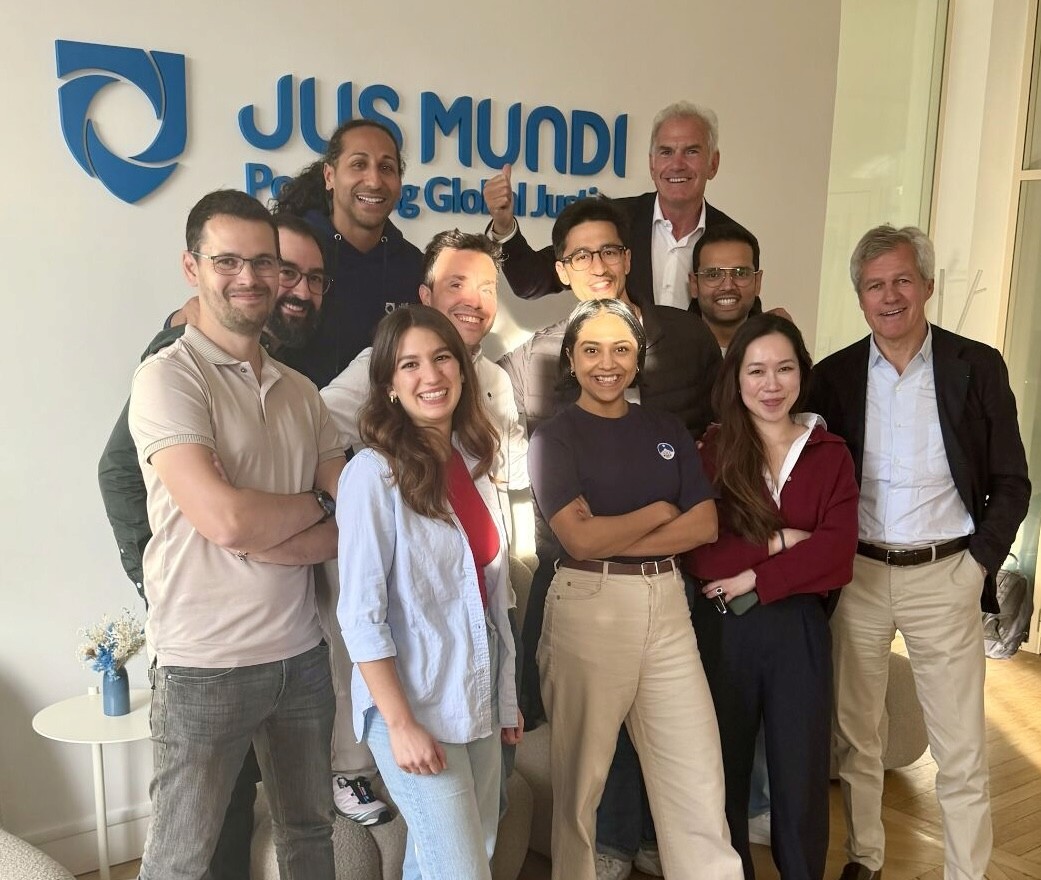
It was one of the most refreshing, raw and no-fluff talks I have attended in a very long time. Meeting Pascal was a lot of fun, but what stayed with me was the clarity of his perspective on AI, on people, and on building for the long term.
Below are the four takeaways I am carrying forward — and, because a takeaway you cannot act on is just a nice quote, what each one actually looks like when you are the person making the decision.
Who is Pascal Cagni?
Pascal Cagni is the Founder and CEO of C4 Ventures, a European venture firm that has backed more than 50 startups, nine of which became unicorns. He was recruited by Steve Jobs in 2000 and spent twelve years as Vice President and General Manager of Apple's Europe, Middle East, India and Africa division, a period in which the region's sales grew from roughly $1.3 billion to more than $40 billion. Since 2017 he has also served as Chairman of Business France and France's Ambassador for International Investments.
In September 2025, C4 Ventures launched a €100 million fund focused on European AI and deep tech — which is to say, this is not a man commenting on AI from the sidelines. He is writing cheques into it.
The four takeaways in one line
AI leaders should focus on the layer where they can create distinctive value, double down on their genuine strengths, hire people they truly know, and treat AI as a long-term transformation rather than a passing trend.
Stay grounded — pick your layer of the stack and own it.
Maximise your strengths — being everything to everyone is a distraction.
Use the "mom and dad" hiring test — know your hires as people, not résumés.
Don't fall into the "AI is a bubble" trap — engage wholeheartedly instead.
1. Stay grounded: pick the layer where you can actually win
The AI market is enormous, and there will be room for builders at every level. From foundation-model labs to application-layer teams, the opportunity is broad enough for many different kinds of businesses to create real value.
The point is not to chase every layer. It is to stay grounded in where you can contribute best.
This is the single most common failure I see in AI teams, and it rarely looks like failure at the time. It looks like ambition. A team building a legal AI product decides it also needs its own embedding model, its own eval harness, its own vector store, and its own agent framework. Six months later the product has not moved and the infrastructure is a museum.
The discipline is knowing which piece of the stack is genuinely yours. When my team cut our LLM inference costs by around 50%, we did train a custom embedding model — but only because token efficiency was the thing our customers were actually paying for. That was our layer. Everything else we bought.
How to apply it: Write down the one capability that, if a competitor copied it tomorrow, would genuinely hurt you. That is your layer. Everything else is a vendor decision, not an identity.
2. Maximise your strengths (harder than it sounds)
Look inwards and identify what you are genuinely great at.
That sounds easy. It is not. In a fast-moving market, the pull toward becoming everything to everyone is constant — and it is usually dressed up as customer-centricity. Knowing your strengths gives you a more durable place to start.
I learned this expensively. Some of the hardest lessons from shutting down NeuralSpace came from saying yes to work that was adjacent to what we were great at rather than central to it. The same instinct is why I said no to a $15 million acquisition offer — a decision I still turn over.
Worth saying plainly: identifying your strengths is not the same as feeling confident about them. Plenty of very capable people in AI are fighting imposter syndrome while doing genuinely distinctive work. The audit is about evidence, not feeling.
How to apply it: Ask three customers why they chose you over the alternative. If their answers do not converge, you have a positioning problem, not a marketing problem.
3. The "mom and dad" hiring test
Regardless of the role, it is important to know the people you want to hire at a personal level.
This is what Pascal called the "mom and dad" test: would you be comfortable introducing this person to your parents, and do you know them well enough to have an opinion? It tells you far more about cultural alignment than a conventional culture-fit interview ever can. Skills matter — but the way someone shows up, thinks, and relates to others is what shapes a team over time.
I have a complicated relationship with this one, because I have run the experiment. I hired my friends despite everyone telling me not to, and I would do most of it again. Knowing someone deeply removes an enormous amount of guesswork in the first ninety days — which, in an early AI team where the roadmap changes monthly, is the difference between a hire who compounds and a hire who stalls.
The caveat Pascal's framing handles well: the test is knowing the person, not liking them. Those are different, and conflating them is how you build a monoculture.
How to apply it: Before an offer, spend unstructured time with the candidate outside an interview format. Not a "culture fit" panel — an actual conversation with no scorecard.
4. Don't fall into the "AI is a bubble" trap
AI is big, it is real, and it is fundamentally changing the world. The right response is not blind hype, but wholehearted engagement: learn it, build with it, and let it change how you think about the problems worth solving.
"Bubble" has become a way to avoid doing the work. It sounds sophisticated — measured, even — while functioning as permission to wait. And the waiting is the expensive part.
That said, healthy skepticism is not the same as dismissal. I have written about why I am not convinced by Anthropic's Model Context Protocol and about how most enterprises are struggling with AI. Being critical about a specific technology or a specific rollout is engagement. Declaring the whole category a bubble is abdication.
The data supports engagement over abdication. Stanford's 2026 AI Index Report tracks capability, investment and adoption year over year and remains the most rigorous annual reference available. Forrester's 2026 predictions frame the current moment as AI moving "from hype to hard hat work" — which is roughly what a transformation looks like from the inside. Deloitte's State of AI in the Enterprise research says something similar about where value is actually landing.
None of that means valuations are rational. It means the technology and the market for the technology are two different questions, and only one of them should determine whether you build.
How to apply it: Replace the bubble question with a better one — "which of our workflows would look absurd in three years if we did not change them?" Then start there. If you want a structured starting point, I wrote five ways to test your AI readiness without coding or maths.
What this means for AI leaders in 2026
Pascal's four points are not really four separate ideas. They are one idea viewed from four angles: clarity beats coverage.
Clarity about your layer. Clarity about your strengths. Clarity about who is on the bus. Clarity about whether you are actually engaging with the technology or performing skepticism about it.
The most visible version of this right now is how work itself is changing inside teams. In the reality of agentic coding, I wrote about PMs, QA engineers and legal experts shipping production code — a shift that only makes sense if you have already decided AI is a transformation rather than a trend. And it is why I keep arguing that AI is a growth engine, not a cost-cutter: the leaders treating it as a line-item saving are, almost by definition, the ones who never picked a layer.
It was a timely reminder that the most valuable way to approach AI is with optimism, clarity, and a strong sense of who you are.
Frequently asked questions
Who is Pascal Cagni? Pascal Cagni is the Founder and CEO of C4 Ventures and the former Vice President and General Manager of Apple's Europe, Middle East, India and Africa (EMEIA) region, a role he held for twelve years after being recruited by Steve Jobs in 2000. He has been Chairman of Business France and France's Ambassador for International Investments since 2017.
What is the "mom and dad" hiring test? It is a hiring heuristic that asks whether you know a candidate well enough at a personal level — as you would someone you'd introduce to your parents — rather than relying on a structured culture-fit interview. The argument is that how someone shows up, thinks and relates to others predicts team impact better than a scripted assessment does.
Is AI a bubble? Market valuations and technological substance are two separate questions. Pascal Cagni's position is that AI is a real, fundamental transformation and that "bubble" framing functions mainly as an excuse to disengage. Annual references such as Stanford HAI's AI Index track adoption and capability trends if you want to judge the substance question on data rather than sentiment.
What should AI founders focus on first? Identify the single layer of the AI stack where you can create distinctive value — the capability that would genuinely hurt you if a competitor copied it — and buy or rent everything else. Chasing multiple layers at once is the most common way early AI teams lose a year.
Keep reading
Read More Articles
We're constantly pushing the boundaries of what's possible and seeking new ways to improve our services.

Ayushman Dash
Aug 20, 2026
AI Advice
Apple's former EMEIA chief Pascal Cagni on four AI leadership lessons: stay grounded, maximise your strengths, hire people you truly know, and stop calling AI a bubble.

Ayushman Dash
Apr 28, 2026
AI Advice
Forget the hype. Here is the practical reality of agentic coding. Learn how our team uses Cursor AI to empower PMs, QAs, and legal experts to ship production code.

Ayushman Dash
Apr 26, 2026
AI
Learn how my team team at Jus Mundi cut LLM token consumption by 46% and improved RAG quality by building a custom context aware embedding model for legal data.