← Blog · Founder stories
The Biggest Mistake I Made as a First-Time Founder: I Was Lying to Myself
 Ayushman Dash · September 9, 2026 · 5 min read
Five years of my life went into building my startup. Then I had to shut it down.
The biggest mistake I made as a first-time founder was not the pricing. It was not the hiring, and it was not the pivot.
I was lying to myself.
Constantly. To an extent that, in retrospect, feels delusional.
What the lie actually looked like
I barely left my room. I was working all the time. I used to fall asleep with my laptop on, wake up, and start working again.
Call it privilege, but living in India meant I did not have to cook or run errands. Household help is affordable there, so I stripped away every “distraction” I could pay someone else to handle.
I was not exercising. I was not moving. I was eating, sleeping and working.
I did not care what I put in my body. On top of that, every time I closed a big chunk of work, I gave myself a Zomato treat as a reward.
Covid did not help. Everything was shut, so I had no excuse to go outside. I was already building in Bhubaneswar, in a city I love, and I saw almost none of it for two years.
“Keep hustling. This is what founders do.”
I told myself that line every day, and I wholeheartedly believed it. There was a strange sense of pride in it.
Even if I was done with my tasks by 5 PM, I would take a short break and then invent new tasks, just to keep grinding. Being finished felt like slacking.
Then we started pitching to VCs and to customers, and the workload genuinely grew. So did the lies. A real deadline is the best cover a lie can ask for.
I already knew what this cost, by the way. A three-week project with Saudi Aramco on 15-hour days had left me burnt out for months. I read that as proof the model worked, not as a warning.
The goalposts kept moving
I would look in the mirror and feel disgusted. I was constantly bloated. And this is the part that sounds stupid now, I had an answer ready every time:
- “I will fix it when the company hits X ARR.” We did not hit X.
- “I will work on myself after we get funding.” We got funded. I did not.
- “I will fix it after I hire a team to take the load off me.” Hiring was harder than anyone tells you.
Three deadlines, all self-imposed, all of them moved the moment they got close. That is not discipline. That is a story you tell yourself so you can keep doing the thing that is hurting you, and I told it for years, wrapped in the phrase “it is all for the greater good”.
The day the numbers came back
Then I got a full body check-up. The results:
- Fatty liver. The non-alcoholic kind, which you earn with food and stillness, not with drinking.
- Cholesterol off the charts.
- Overweight, and I had stopped looking at that number honestly.
- I could not run 1 km without gasping. Not a metaphor. One kilometre.
Here is the part I want every founder to sit with. In the same season, we were not hitting our ARR targets and hiring was harder than expected.
So the trade I thought I was making, my health for the company’s outcome, was never actually on the table. I paid, and the company did not get better. That is the whole lesson in one sentence.
I learned through intense suffering that no matter how much blood, sweat and tears you pour in, things can still refuse to work out. You do not get to buy the result. You only get to choose what you spend.
What I changed
I course-corrected. Nothing clever, nothing you have not heard:
- I started running.
- I started taking the right amount of breaks, on purpose, not when I collapsed.
- I took time off. Fully off, phone away, not “off but reachable”.
- I fixed my diet.
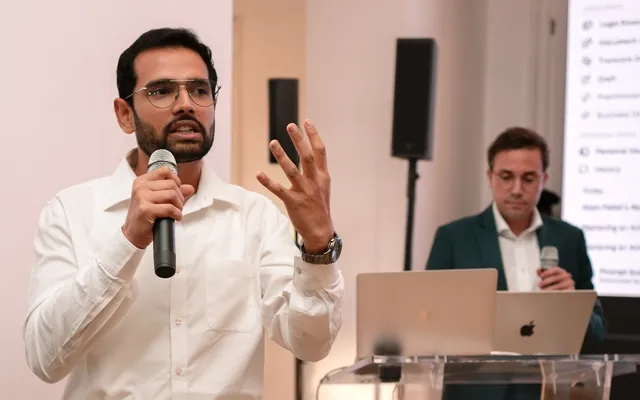
I lost the weight, built strength, and honestly, I felt proud looking at myself again. The photo at the top of this post is the same person, a few years apart. Then is the NeuralSpace stretch. Now is now.
I want to be clear about what that photo is not. It is not a before and after for a fitness plan, and I am not the person to give you medical advice. Talk to a doctor, get the blood test, and find out what your own numbers say. Mine were the first honest feedback I had received in years, because a liver does not care about your narrative.
What I will do differently if I build again
If I build a company again, I will not follow hustle culture and I will not endorse it. Most importantly, I will not lie to myself.
I will still go berserk when the moment needs it. Launch weeks are real, outages are real, a customer demo in Dammam is real. But I will stop when I have to stop, and I will not confuse the stopping with weakness.
In a startup there are a million things outside your control, and a few of the big ones come down to luck. The market moves. Funding dries up. A model release changes your roadmap in an afternoon.
What you do to your body and your mental health is the only thing that is genuinely in your control. Spend it like it is the last asset on the balance sheet, because when everything else goes, it is.
I feel bad for the people still selling the mad grind as a personality. I understand the people buying it, because I bought it, at full price, for five years.
Frequently asked questions
Is hustle culture actually bad for a startup? It is bad for the founder, and the founder is a single point of failure. In my case the health damage was real and measurable, and none of it moved the company’s ARR or made hiring easier. The cost landed. The return did not.
How do you know when you are lying to yourself as a founder? Watch for a promise with a moving date attached to it. “After the round”, “after the next hire”, “after we hit X”. If the date has moved more than twice, it is not a plan. It is a lie with a calendar on it.
What are the first things to fix? Movement, sleep and food, in that order, and a full body check-up so you are working with numbers instead of a feeling. Then one real day off per week that survives contact with a bad week.
Can you build a serious company without the grind? You can build one without the constant grind. Intensity in bursts is part of the job. Living at that intensity for five years is not intensity, it is just damage collected slowly.
Take the test. Book the check-up you have been postponing. And then tell me honestly: which one of your deadlines has already moved twice?